
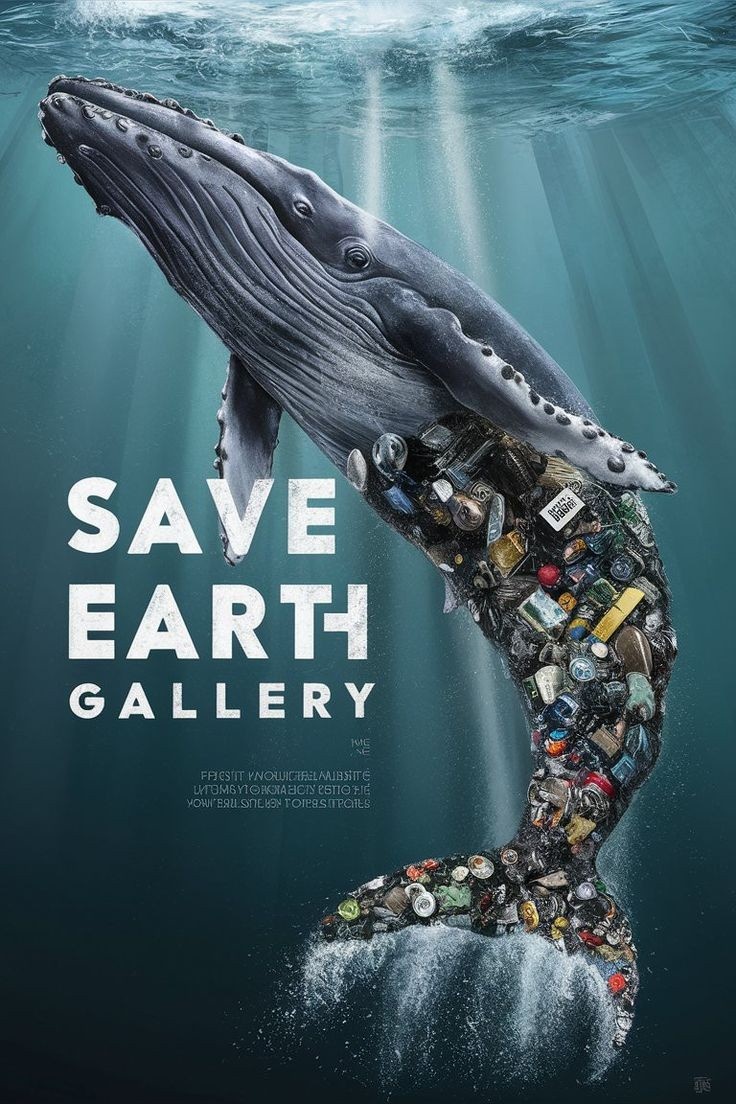
AceNewsDesk – Scientists used AI to model local waste management in 50,000 municipalities worldwide and say the results suggest a need to improve access to waste collection systems

Organising the plastic pollution that entered the environment in 2020 in a line could circle the Earth more than 1,500 times. Dumped into a pile, the refuse would fill up New York City’s Central Park in a layer as high as the Empire State Building. Put another way, that’s about 57 million tons (52 million metric tons) of plastic waste that was not properly disposed of—and pieces of it could now be floating in the ocean, sitting at the top of a mountain or filtrating your bloodstream. Scientists tallied these numbers in a new study published in Nature on Wednesday, creating the first-ever global plastics pollution inventory.


“It hasn’t been done before,” study co-author Costas Velis, an expert in resource efficiency systems at the University of Leeds in England, tells New Scientist’s Madeleine Cuff. Researchers used artificial intelligence to model waste management in more than 50,000 municipalities worldwide and predict the total amount of plastic that enters the environment.
The plastic pollution measured in the study represents just one-fifth of the total global plastic waste. However, the results, the authors argue, demonstrate how improving access to waste collection services worldwide can reduce the scale of the problem. “ Uncollected waste is the biggest source of plastic pollution, with at least 1.2 billion people living without waste collection services forced to ‘self-manage’ waste, often by dumping it on land, in rivers, or burning it in open fires,” Josh Cottom, lead author of the study and a research fellow in plastics pollution at the University of Leeds, says in a statement.
Per the statement, this “self-managed” plastic waste makes up more than two-thirds of the modelled plastic pollution. Plastic burning has become a substantial problem, with 30 million tons of plastic burned in 2020 without environmental oversight. This uncontrolled process can release carcinogens, particulate pollution, heavy metals that harm human health, and greenhouse gas emissions.
The study also calculated the most significant contributors to plastic pollution in the world: India is in first place, producing 10.2 million tons a year; Nigeria is in second; Indonesia is in third; and China—which had been ranked in first place according to other models—instead comes in fourth. The U.S. ranks 90th, producing more than 52,500 tons of plastic pollution annually. In the words of Interesting Engineering’s Sujita Sinha, the findings outline a “trash apocalypse.”
The ranking highlights a significant gap in plastic pollution between the Global North and Global South. Even though low- and middle-income countries produce less plastic waste, a substantial portion is disposed of improperly, becoming a more significant source of plastic pollution. Even low-income countries with limited plastic pollution are hotspots when scientists analyse their pollution per capita. Higher-income countries, on the other hand, produce more plastic waste but have more efficient waste disposal systems, so less of it turns into pollution.

However, “we shouldn’t put the blame, any blame, on the Global South,” Velis tells Associated Press’ Seth Borenstein. “And we shouldn’t praise ourselves about what we do in the Global North in any way.” He adds that people’s ability to dispose of waste properly depends on their government’s power to provide the necessary services.
Therese Karlsson, science and technical advisor to the International Pollutants Elimination Network tells the Associated Press that the study doesn’t focus enough on the plastic waste trade through which wealthy countries send their waste to poorer ones. While the study says this trend is decreasing, Karlsson, who was not involved in the paper, disagrees on the basis that overall waste trade is increasing, which she adds is likely an indicator of an increase in plastic waste trade as well.
Now, scientists are calling for waste collection to be considered a basic necessity ahead of negotiations on a global plastic waste treaty planned for November in South Korea. The study also nearly coincides with Plastic Overshoot Day, which was projected for September 5—the day of the year when the Earth’s plastic waste production surpasses our waste management systems’ capacity to process it.
At Sterling Publishing & Media Service Agency, we value transparency and accountability. We want to inform you that we are not responsible for any external content, links, or posts. We are dedicated to providing exceptional services and sincerely appreciate your support. Thank you.

You must be logged in to post a comment.