
Black holes are regions in space where the gravitational pull is so strong that nothing, not even light, can escape. This means you would be pulled in and crushed if you got too close to a black hole.
Black holes have such strong gravity because they are created when a massive star collapses. When a star runs out of fuel, its own gravity causes it to implode or fall in on itself. If the star is massive enough, it will collapse to a single point, called a singularity, with an incredibly high density.
The boundary around a black hole, beyond which nothing can escape, is called the event horizon. Once you cross the event horizon, you will be pulled into the singularity at the centre of the black hole.
Black holes are invisible because no light can escape from them. However, we can detect black holes indirectly by observing their effects on nearby objects. For example, if a star is orbiting a black hole, we can see the star being pulled and distorted by the black hole’s gravity.
Black holes come in different sizes – from small “stellar” black holes a few times the mass of our Sun, to supermassive black holes millions of times more massive than the Sun, which are found at the centres of most galaxies.
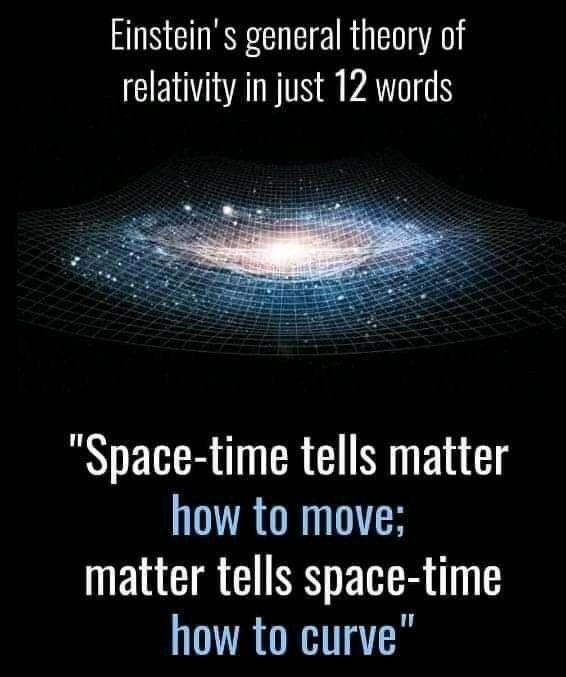
The extreme gravity of black holes can also cause extraordinary effects, like time dilation, where time appears to slow down the closer you get to the black hole. This is one of the predictions of Einstein’s theory of general relativity.
Albert Einstein was born in Ulm, Germany, on March 14, 1879. From an early age, he displayed a keen interest in science and mathematics. Einstein is best known for his theory of relativity and the equation E=mc². This groundbreaking work transformed our understanding of energy, time, and space. In 1921, he was awarded the Nobel Prize in Physics for explaining the photoelectric effect, which was crucial in developing quantum theory.

Due to the rise of Nazism in Germany, Einstein emigrated to the United States in 1933 and worked at Princeton University until he died in 1955. In addition to his scientific achievements, Einstein was a passionate violinist and an advocate for peace and civil rights. His contributions to science have left an indelible mark on the world.
A human being is a part of the whole known as the "Universe," limited by time and space. We often perceive ourselves, thoughts, and feelings as separate from everything else, creating an optical illusion of our consciousness. This illusion is a prison, confining us to our personal desires and attachments to a few close individuals. Our goal should be to break free from this prison by expanding our circle of compassion to include all living beings and the beauty of nature.

You must be logged in to post a comment.