
Steve McQueen, often hailed as the “King of Cool,” was more than just a movie star; he was a cultural icon of the 1960s and 1970s, embodying the rebellious spirit of his era. Born on March 24, 1930, in Indiana, McQueen had a rough childhood and spent time in reform schools. His early life was marked by hardship, but it also helped shape his gritty, tough-guy persona that would later captivate audiences worldwide. His rise to fame began in the 1950s with minor roles in television and film, but his breakout performance in The Magnificent Seven (1960) truly put him on the map. From there, he would become one of Hollywood’s most sought-after actors.
By the mid-1960s, McQueen had solidified his status as a leading man, starring in box office hits such as The Great Escape (1963) and The Sand Pebbles (1966), which earned him an Academy Award nomination. His calm demeanor and understated acting style made him a favorite among audiences, while his off-screen love for fast cars and motorcycles only enhanced his tough-guy image. McQueen was often photographed by famous photographers like John Dominis, who captured his rugged charm in a series of iconic images, including a 1964 shoot that remains one of the most recognizable portraits of the actor.
McQueen’s career reached new heights in the late 1960s and early 1970s with films like Bullitt (1968) and The Thomas Crown Affair (1968). His famous car chase scene in Bullitt, driving a Ford Mustang, became legendary, cementing his place in pop culture. McQueen’s passion for racing and obsession with perfection also led him to star in Le Mans (1971), a film showcasing his deep connection to motorsports. This period of his career has defined him as an actor and an American icon who embodied the independent, rebellious spirit of the times.
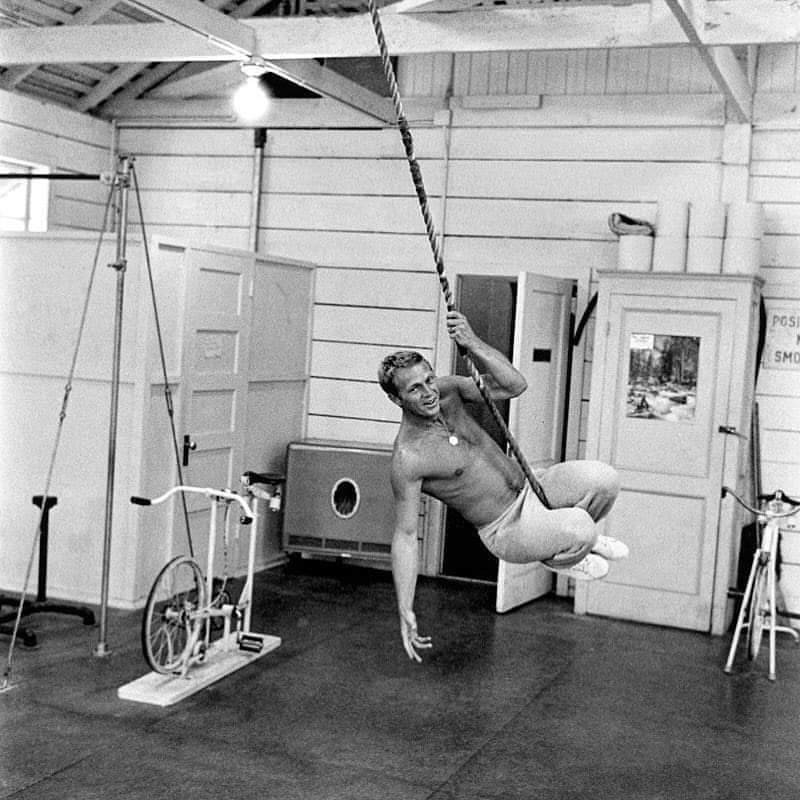
McQueen’s lifestyle was as compelling as his on-screen roles. Known for his intense training regimen and love for boxing, weight training, and racing, he was as dedicated to his fitness as he was to his craft. His workouts and passion for physical challenges mirrored the toughness of his movie characters. Off-screen, McQueen loved fast cars and motorcycles and a rebellious attitude that only amplified his legend. This duality of his persona—the glamorous movie star and the rugged, independent man—made him a unique figure in Hollywood.
Steve McQueen passed away in 1980 at 50, but his legacy remains. His films remain beloved, and his style continues influencing fashion and pop culture. McQueen’s timeless appeal endures through his movies or off-screen persona. His influence extends beyond cinema, touching everything from men’s fashion to the image of the modern action hero. Even decades after his death, Steve McQueen remains a symbol of extraordinary grit and authenticity.

You must be logged in to post a comment.