

Bourke Street, Melbourne, south side between Swanston and Elizabeth Streets, looking east, Dec. 17 or 18, 1860.
Image shows a line of horses and carts outside Rooklidge & Co. and the Labor Office buildings. A lamp post reading: "Cobb & Co. Coach Office" is in foreground (lower left). The Royal Mail Hotel is further down the street (on the SE corner of Swanston Street).

This pavilion housed products made by the large Australian firm Clyde Engineering Co. Ltd of Granville, a Sydney suburb. Clyde Engineering made agricultural machinery, engineering equipment, and railway rolling stock during the first half of the twentieth century.
For the Clyde Engineering Company, the Sydney Royal Easter Show was an important promotional event. The Show was, and still is,, an eclectic range of activities and displays, including a grand parade, produce exhibitions, equestrian events and pavilions of sheep, cattle, horses, pigs and fowls. For Clyde Engineering, the Show was an opportunity to display its farm implements and all other products to a broad audience of city and country visitors. It was also a time to introduce new designs and models.
Source: MAAS – Powerhouse Collection

Photo credit Edwin Caswell Cooke (my partner’s grandfather, taken by him in his very early 20’s)

Bathing machines with shark (and man) proof enclosures so ladies could dip in the sea.
photo credit Tyrrell’s bookshop

Western Australia
Most buildings on the goldfields were built of corrugated iron. Water was scarce and expensive.
Summertime temperatures were extreme.
“Damn, Coolgardie! Damn the track!
Damn it there, and damn it back!
Damn the country! Damn the weather!
Damn the goldfields altogether!”
photo credit Western Australian newspaper


Ralph Snowball was born in north-east England in 1849. He immigrated to Australia with his family in 1879.
He didn’t begin his career as a professional photographer until about 1885. He mostly travelled in a horse-drawn waggonette, although he was also known to travel by train, tram and boat.
Ralph Snowball died in 1925. In the cellar of his house, the negatives produced during his photographic career remained untouched until 1988. While many were damaged by time, hundreds have survived, donated to the Newcastle Libraries by the Snowball family. These images have become a treasured link to Newcastle’s history.
Over the years Ralph Snowball photographed images of the harbour, picnics, the city, industries as well as the suburbs of Newcastle and the people who lived there. He even went into schools to take the class photos.
Images: All from Snowball Collection
Ralph Snowball with his horse and wagonette
001 003639
1888
Cranes at Carrington
001 001123
1901
‘Tug of War’ at Hetton Wheelers’ Picnic
001 001106
1898
Jays Pharmacy (361 Hunter St Newcastle West)
001 000326
1904
Topmen, West Wallsend Colliery
001 000323
1898
McIntosh’s Flour Mills Hamilton
001 000056
1902
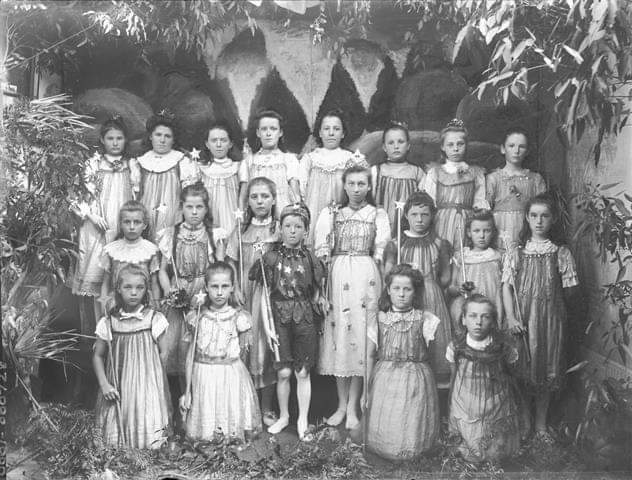
New Lambton School cantata
001 000728
1894
Lost Newcastle #NewcastleStories #RalphSnowball
You must be logged in to post a comment.